How to Prepare for University Admissions Interviews: Tips and Strategies
University admission interviews are a critical component of the application process, especially for competitive programs at top institutions around the world. These interviews give admissions officers a chance to evaluate not just your academic achievements, but also your communication skills, motivation, and overall fit for the university’s culture.
For UAE students applying to universities in countries like the UK, USA, Canada, and Australia, preparing for the interview is essential. With limited opportunities to make a lasting impression, a well-prepared interview can set you apart from other applicants and significantly boost your chances of acceptance.
In this blog, we’ll explore proven tips and strategies to help you confidently prepare for your university admissions interview. From understanding the purpose of the interview to mastering common questions and handling nerves — we’ve got you covered every step of the way.
Purpose of the Interview
University admission interviews are designed to go beyond what’s written in your application. Admissions officers use this opportunity to:
- Understand who you are as a person: They want to gauge your personality, interests, communication skills, and motivation for choosing their university and program.
- Assess your critical thinking and clarity: How well do you articulate your thoughts? Are your answers thoughtful and aligned with your academic goals?
- Determine cultural and academic fit: Universities look for students who will thrive in their learning environment — both socially and academically.
Interviews serve as a valuable supplement to your grades, test scores, and personal statement. They give the admissions team a fuller picture of your potential.
Common Interview Formats:
- One-on-One (In-Person or Virtual): A single interviewer, often a faculty member or admissions officer, asks questions in a conversational format.
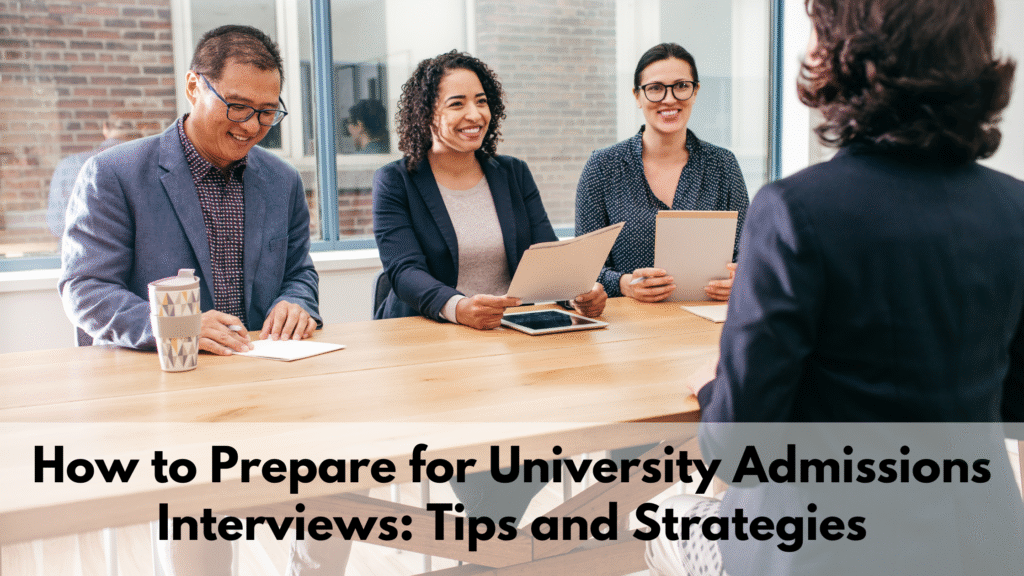
- Panel Interviews: You are interviewed by a group of university representatives who may take turns asking questions.
- Group Interviews: Multiple applicants are interviewed at once to assess how you engage and communicate in a group setting.
- Alumni Interviews: Conducted by a graduate of the university, these are often more informal but still influential.
Each format evaluates your readiness, enthusiasm, and compatibility with the institution — making it vital to prepare effectively.
Research the University and Program
One of the most effective ways to stand out in a university interview is by demonstrating genuine knowledge and interest in the institution and its academic offerings. Admissions teams are impressed when applicants can clearly articulate why they are a good fit.
- Know the university’s values and culture: Visit the official website and learn about their mission, teaching style, and student life. Understand what sets the university apart and how it aligns with your personal and academic goals.
- Review the program and department details: Explore the specific course structure, faculty profiles, research opportunities, and any unique modules. This helps you show a clear and informed interest in the program.
- Prepare tailored responses: Be ready to give examples of how your academic interests, extracurricular activities, or career aspirations align with what the university and department offer. Mention specific professors, facilities, or academic clubs if relevant.
Doing this homework not only shows initiative but also helps you answer questions with confidence and enthusiasm.
Practice Common Interview Questions
Preparing for likely interview questions helps reduce nervousness and ensures your responses are thoughtful and organized. While every interview is unique, many questions follow predictable themes aimed at assessing your personality, motivation, and potential.
Common Questions You Should Practice:
- “Why do you want to study at this university?”
- “Tell us about your strengths and weaknesses.”
- “Describe a challenge you faced and how you overcame it.”
- “What are your academic interests?”
- “Where do you see yourself in five years?”
Use the STAR Technique for Stronger Responses:
The STAR method (Situation, Task, Action, Result) helps you give clear, structured answers, especially for behavioral or experience-based questions.
Example:
Q: Tell me about a time you demonstrated leadership.
S: In my school’s science club, we were organizing an interschool robotics competition.
T: As team lead, I had to coordinate between students and faculty.
A: I created a planning timeline, delegated tasks, and managed communications.
R: The event was a success, drawing participation from 10 schools and gaining positive media coverage.
Be Authentic and Self-Aware:
Admissions officers value honesty and maturity over perfection. Don’t memorize robotic answers. Instead, reflect on your real experiences, motivations, and growth. Show self-awareness when discussing your strengths or admitting your weaknesses — and highlight what you’re doing to improve. Confidence with sincerity goes a long way in building trust.
Prepare Your Own Questions
University interviews aren’t just about the institution assessing you — it’s also your chance to learn more about them. Coming prepared with your own questions shows genuine interest, maturity, and proactive thinking — qualities top universities value in prospective students.
Why It Matters:
Asking thoughtful questions can:
- Demonstrate your enthusiasm for the program.
- Help you understand whether the university is the right fit.
- Make your interaction more engaging and conversational.
Examples of Good Questions to Ask:
- What kind of support services are available for international students?
- How would you describe the campus culture and student life?
- Are there research or internship opportunities for undergraduate students?
- What do alumni often go on to do after graduating from this program?
- How does the university support career development or job placements?
Choose questions that reflect your interests and goals, and avoid anything that could be easily answered by browsing the university’s website. Aim for curiosity that shows you’re serious about your future.
Dress Appropriately & Be Professional
First impressions matter — especially during university admissions interviews. Whether the interview is in person or virtual, presenting yourself professionally signals respect and seriousness about your academic journey.
Dress Codes by Interview Type:
- In-Person Interviews: Opt for formal or smart semi-formal attire. For men, a collared shirt or blazer with trousers works well. For women, a modest blouse with slacks or a neat dress is appropriate.
- Virtual Interviews: Even if you’re at home, dress as you would for an in-person meeting — at least from the waist up. Avoid loud patterns or colors that distract on screen.
Professionalism Tips:
- Body Language: Sit upright, maintain eye contact (or look at the camera during virtual calls), and avoid fidgeting.
- Tone of Voice: Speak clearly and confidently. Avoid sounding rehearsed or too casual.
- Confidence Cues: Smile when appropriate, nod to show engagement, and take a brief pause before answering questions to collect your thoughts.
By showing up well-groomed and composed, you’ll not only look the part — you’ll feel more confident too.
Mock Interviews & Feedback
Practicing through mock interviews is one of the most effective ways to prepare for university admission interviews. They simulate real interview settings, helping you gain confidence, improve communication, and reduce anxiety.
Why Mock Interviews Matter:
Mock interviews allow you to rehearse answers to common questions, test your body language, and fine-tune your timing. They expose any nervous habits, unclear responses, or gaps in your preparation.
Professional Guidance Helps:
Working with experienced education consultants, like those at Aemi Consultancy & Studies, can provide valuable insights. Our experts understand what top universities look for and can tailor mock interviews to match real formats — whether virtual, panel-style, or one-on-one.
Use Feedback to Improve:
Feedback from mock interviews is a goldmine. Take notes on areas where you hesitated, lacked clarity, or could expand. Practicing again with those adjustments will help you polish your delivery and show up as the best version of yourself during the real interview.
Manage Stress and Stay Positive
Feeling nervous before a university admissions interview is completely normal — but managing that stress is key to performing your best. Developing simple pre-interview routines can calm your mind and boost your confidence. Try deep breathing exercises, positive visualizations, or short affirmations like “I’m prepared and confident” to set a relaxed tone.
It’s also helpful to shift your mindset: remember, the interview is a conversation, not a test. Universities want to get to know the real you, not judge you under pressure. Be authentic, engage naturally, and focus on sharing your story.
If you stumble on a question, don’t panic. Pause, take a breath, and ask for a moment to gather your thoughts — it shows maturity and self-awareness. A small hiccup won’t ruin your chances if you handle it with composure and continue positively.
Conclusion: How to Prepare for University Admissions Interviews
Preparing for a university admissions interview doesn’t have to be overwhelming. By understanding the purpose of the interview, practicing common questions, preparing your own, dressing appropriately, and managing your stress, you’ll increase your chances of making a confident and memorable impression.
Consistent practice and the right mindset are key. Treat every mock session as a real opportunity to refine your communication, self-presentation, and storytelling skills.
📣 Need Expert Guidance for Your University Interview?
Aemi Consultancy & Studies offers personalized interview coaching, mock interview sessions, and strategic advice tailored to your university and career goals. Let us help you feel confident, prepared, and ready to impress.
📞 +971 50 40 52945
📩 info@aemiconsultancyandstudies.com